Watch: About Body Scrubs – Part I
Watch: About Body Scrubs Part II
Introduction to Exfoliants: Salt and Sugar Scrubs
Salt and sugar scrub are well-known, highly effective body treatments for stimulating circulation and removing dirt and dead surface layer skin cells, while leaving the skin soft and glowing. Body exfoliation products can be called salt or sugar scrubs or body polishes. Salt and sugar scrubs can also be formulated for isolated regions of the body, such as for the hands, feet or elbows.
Key therapeutic benefits of exfoliating include:
- Stimulates lymph and blood circulation
- Brightens the skin
- Supports and enhances cellular rejuvenation
- May support immunity
- Helps unblock pores
- Improves nutrient exchange
- Protects the skin from transepidermal water loss
- Prepares skin for next step in body care program, such as applying a body oil or lotion
Salt or Sugar?
The core difference between salt and sugar is that sugar adds an emollient quality to the body scrub. Sugar scrubs can be beneficial when the individual has dry skin or during the Autumn months when there is a natural tendency for dry skin due to reduced humidity and the use of heat to warm the home.
I personally tend to use salt scrubs more often than sugar scrubs. But truly, the choice is entirely up to you!
NOTE: Salt and sugar scrubs are designed to be used on the body rather than the face as they can be a bit too harsh for facial skin.
When to use body scrubs
Although body scrubs may be used throughout the year, they are particularly indicated for the spring and winter months when the skin and body can become sluggish or in need of detoxification or cleansing. Sugar scrubs, as mentioned above, have a more emollient-like quality and are recommended during the summer and autumn months when there is a proclivity for dryness of the skin.
How often should someone use a body exfoliant?
Exfoliation is a valuable step in any comprehensive skincare routine. It helps remove dead skin cells, unclog pores, and promote a smoother, more radiant complexion. The frequency of exfoliation depends on individual skin type and sensitivity.
For the body, exfoliation can be performed up to 3-5 times a week. Those with sensitive skin may want to start with less frequent exfoliation and gradually increase the frequency as their skin becomes more accustomed to the process. It’s essential to listen to your skin and adjust the exfoliation routine accordingly.
Exfoliation can be done as often as needed or desired on hands and feet. These areas tend to have thicker, more resilient skin and are often subject to more wear and tear than other parts of the body. Regular exfoliation can help keep the skin on the hands and feet smooth, soft, and well-maintained.
Regardless of the area being exfoliated, it’s important to use gentle, circular motions and to avoid over-exfoliating, as this can lead to irritation and damage to the skin. Following up with a moisturizer after exfoliation can help keep the skin hydrated and protected.
Are there contraindications to exfoliating?
Yes! There are a number of contraindications to exfoliation, including:
- Do not exfoliate on open wounds, thin or broken skin, or when a chronic inflammatory skin condition is
- Avoid exfoliants on sunburned skin or immediately after waxing or Wait 24 to 48 hours after shaving or waxing to use body scrub.
- Avoid exfoliants on varicose veins and moles., as the use of exfoliants in these circumstances may increase irritation or complicate the condition
Depending on skin type and sensitivity, the overuse of exfoliation can leave the skin sensitive and inflamed. Overuse, particularly of harsh exfoliants, can cause the skin to thicken and grow leathery. It is important to emphasize that exfoliating is a gentle process and it is not necessary to scrub excessively or harshly.
How to Use a Body Scrub:
- Wet the skin in the shower (or in foot/hand bath if using scrub for the feet or hands)
- Apply scrub to desired area (e.g. the legs) and gently massage the scrub onto the skin. Avoid pressing down too hard, just a light pressure a you massage the scrub onto area selected.
- Continue to apply scrub to various areas of the body (e.g., the arms, back, shoulders, neck, and bottom)
- Rinse scrub off with warm water.
- After leaving the shower and while skin is still slightly damp: apply a body oil or lotion to nourish, protect, and support hydration of the newly exfoliated skin.
Incorporating dried herbs, ground nuts, seaweeds, and other natural ingredients can produce variations on the traditional salt glow.
Shelf life:
A body scrub has a shelf life of approximately 6-12 months or more. I recommend using it within 3 months to maintain its vitality.
Packaging Body Scrubs
I recommend you package body scrubs in 8- and 16- ounce jars.
Essential Oil Dilution Rate for Salt Scrubs
If you are using a 16-ounce jar
1 1/2 cups of salt (approx. 425-440 gm) or sugar (350-360gm)
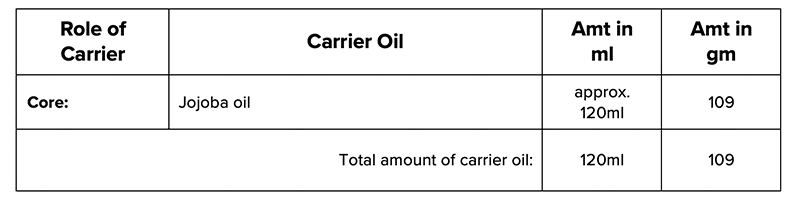
1/2 cup carrier oil (approx. 104-109 gm: approx. 120ml)
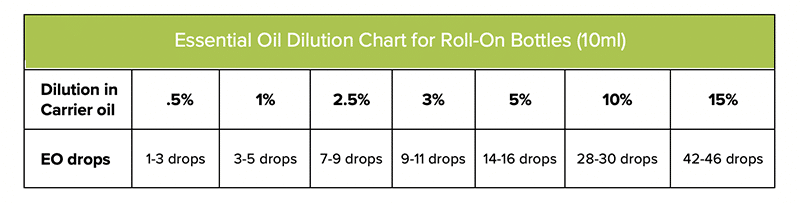
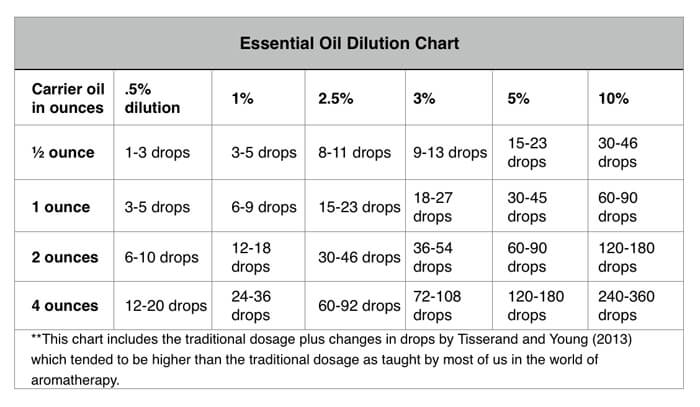
3% dilution of essential oils: 72-108 drops per jar depending on choice of essential oils and dropper size (average 80-90 drops per 16-ounce jar)
If you are using an 8-ounce jar
1 cup of salt (approx. 250-273 gm) or sugar (203-205gm)
1/4 cup + 1 Tbsp. carrier oil (approx. 62 gm or 80ml)
3% dilution of essential oils: 48-72 drops per jar depending on the choice of essential oils and dropper size (average 55 drops per 8-ounce jar)
PLEASE NOTE: Weights and measurements will vary slightly. This is okay!
How to formulate a body scrub
This scrub is designed to fill a 16-ounce jar.
My intention/goal: To create a stimulating, detoxing, and invigorating salt scrub
My focus: Physical – to support healthy skin and circulation
My approach: System affinities/Therapeutic Actions
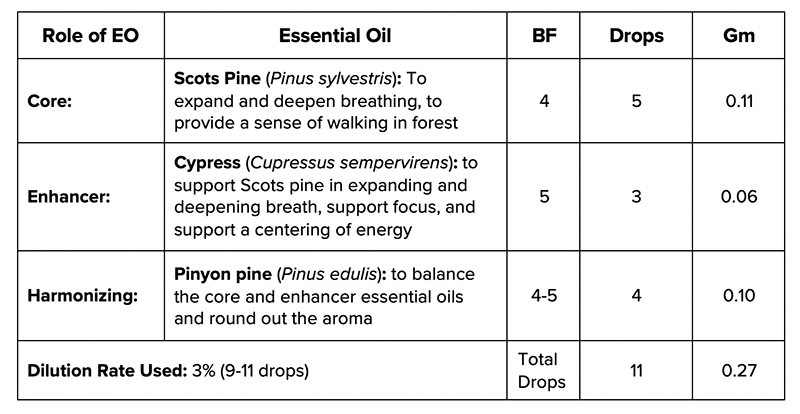
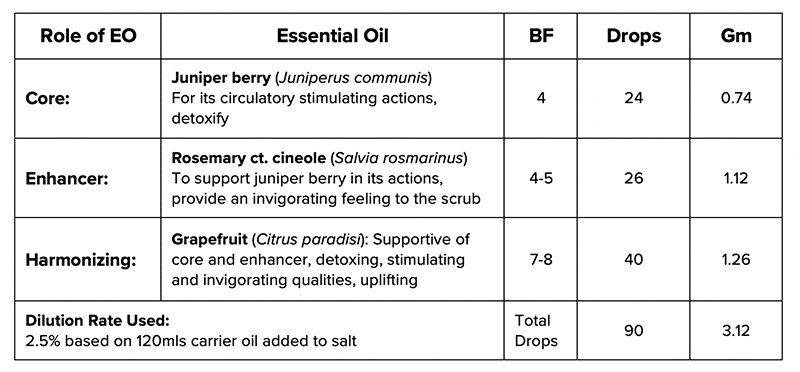
1. Select 3-5 essential oils to work with based upon client consultation and goals of treatment or product. Core/Enhance/Harmonize
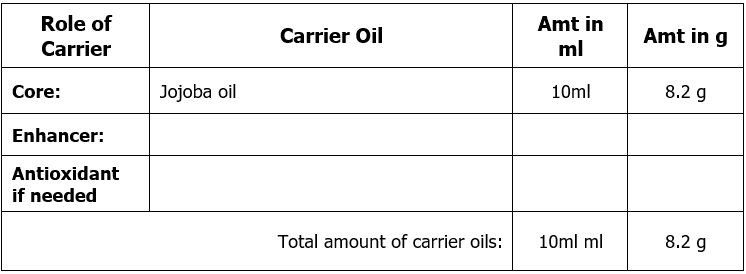
2. Select carrier oil or oils (includes herbal oils)
3. Measure (and weigh, if desired) sea salt
4. Measure (and weight, if desired) carrier oil
5. Using a small (10ml) beaker, place drops of each essential oil into the beaker or into the same beaker as the carrier oil. You can also weigh each individual essential oil by pressing the tare after drops of one of the essential oils are placed into the beaker.
6. In an appropriate size bowl, place sea salts and then add carrier oil + essential oil synergy.
7. Stir ingredients until well combined.
8. Once combined, scoop the scrub into the jar.
9. Label the bottle with the name and list all ingredients.
10. The salt scrub is now ready for use.
Shelf life:
A salt scrub will be good for approximately 6-12 months or more. I recommend trying to use it within 3 months to receive its vitality.
Sample Recipe
Rosemary Juniper Salt Scrub!