Baths have been employed for their health benefits since ancient times. The earliest writings regarding the therapeutic benefits of bathing are attributed to the Indian Vedas, which date from approximately 1500 BC. The Romans are best known for utilizing baths extensively for their health benefits, creating elaborate bathhouses for people to visit. Hippocrates, the famed Greek physician, employed ‘hydrotherapy’ with aromatic oils and deemed baths essential to good health. The history of medicinal baths is extensive, and it would appear that they are experiencing a renaissance in the modern world due to their benefits in relieving stress and supporting emotional and physical well-being.
Watch About Baths with Jade
Full-Body Baths
A full-body bath is the complete immersion of the body in a fluid or in a vaporous medium such as steam. The effects of a full-body bath will vary according to the temperature of the water and the duration of time the individual will be immersed. The average time for a full-body hot bath (90°-105° F / 32° C – 40° C) is twenty minutes or less.
In general, aromatherapy full-body baths are useful to:
- Reduce stress/anxiety
- Alleviate muscular aches, pains, and tension
- Soothe mental or physical fatigue
- Stimulate circulation
- Enhance lymph circulation
- Reduce pain and stiffness
- Improve tone and health of skin
- Aid detoxification
- PLUS the benefits of the essential oils, hydrosols, or salts used
Essential Oils in the Bath
Therapeutic dilution recommendation
The number of drops of essential oil to place into a bath will depend upon the essential oil(s) being utilized. On average, use 5 to 10 drops of essential oil in a full-body bath. However, there are some oils, such as jasmine, when 1 to 2 drops would be sufficient, and other oils, like lavender, when 10 to 15 drops would be fine. Avoid essential oils that are dermal irritants, dermal sensitizers, and mucus membrane irritants in baths. Examples of essential oils to AVOID in the bath include: cinnamon bark, citronella, lemongrass, thyme ct. thymol, oregano, and winter savory.
How to add essential oils into bath water
To avoid potential skin irritation, it is useful to combine essential oils with a dispersant prior to adding them to the bathwater.
Dispersants include:
- A small amount of liquid castile soap: combine essential oils with 1 Tablespoon of liquid soap in a small bowl, gently stir together, then add to bath water.
- A small amount of carrier oil with or without salt (caution: use of carrier oil can make the tub slippery!): combine essential oils with 1 Tablespoon of carrier oil in a small bowl, gently stir together, then add to bath water.
- Solubilizer: combine essential oils with a solubilizer, then add to bath
Hydrosols in the Bath
Another great way to enjoy an aromatic bath is to use hydrosols. You can either use just hydrosols or add hydrosols + essential oils. For babies and young children, the use of hydrosols without essential oils is much preferred.
- For babies up to six months add 1 teaspoon of chosen hydrosol to an infant bathtub or 2 teaspoons for an adult tub filled to baby depth.
- For children up to twelve years of age, add 1 teaspoon of hydrosol per year of age, up to a maximum of 8 teaspoons.
- Adults can use from 30 to 250 milliliters (approximately 1 to 8 ounces per tub).
How to prepare a bath:
The water should be at the desired temperature, and the essential oils or hydrosols should be added to the bath once the individual is in the bath. Placing essential oils in the bath prior to immersion can lose some of the desired effects, as well as increase the chance of irritation to the mucus membranes of the vaginal/rectal area. Once in the bath, add the appropriate essential oil/synergy drops (that have been combined with a dispersant) and agitate the water to disperse the concentration throughout the bathwater. Essential oils are lipophilic and hydrophobic, so most often, the essential oils will quickly seek to be absorbed by the skin.
Safety Note: If an individual gets red blotches or irritation on the skin while bathing, this means that too much essential oil was added to the bath, a dispersant should have been used, or the client has experienced an idiosyncratic or allergic reaction. Should irritation occur, recommend a light cream or aloe vera gel without essential oils; the irritation should dissipate within an hour.
Simple Aromatic Bath Recipe: To support a good night’s sleep
- 5 drops Lavender (Lavandula angustifolia)
- 3 drops Frankincense (Boswellia sp.)
- 2 drops Tangerine/Mandarin (Citrus reticulata)
- 1 spoonful (Tbsp.) Sweet almond oil or other carrier oil
To make: Combine essential oils and carrier oil in a small glass beaker or bowl. Gently stir together with a glass or metal stirring rod. Add to bath water once you are in the bath. Take a few deep breaths to enjoy the initial aroma, relax and enjoy the bath. Safety note: the use of a carrier oil can make the bathtub a bit slippery; use caution getting out of the tub.
Aromatic baths with Epsom salts or sea salts
Epsom and sea salt baths are highly effective in aiding and supporting the body in detoxing, physically and emotionally. Bathing salts with essential oils can also relieve anxiety, reduce the impact of stress on the body and mind, support a healthy night’s sleep, and uplift the spirits.
Epsom salts (magnesium sulfate) aid the elimination of waste material from the skin and reduce muscular aches and pains by aiding the elimination of uric acid build-up. Magnesium is also absorbed by the skin, further reducing tension and inflammation in the body. Magnesium salt baths can relieve muscle cramps, relieve stiffness in joints, relieve or reduce back pain, and soothe achy, overworked legs and feet.
The use of salts in a bath can support and enhance the body’s immune response by stimulating lymph and blood circulation. Sea salt or Epsom salt baths can also be incredibly useful for energetic/emotional cleansing.
Essential Oil Dilution Rate for Aromatic Bathing Salts
When it comes to making bathing salts, I tend to recommend 5-15 drops of essential oils per cup of salt rather than thinking in terms of dilution rate. Total number of drops can vary depending on the essential oil or essential oils selected.
How to formulate bathing salts
This is for a 16oz jar of bathing salts.
My intention/goal: To create a relaxing, anxiety-reducing bathing salt
My focus: Emotions/Psyche
My approach: Aromatic palette (floral, spice, herbaceous, citrus)
1. Measure (and weigh, if desired) salt in 16oz jar / Sea salt: 1 ½ cups / 415g
2. Select 3-5 essential oils to work with based upon client consultation and goals of treatment or product. Core/Enhance/Harmonize
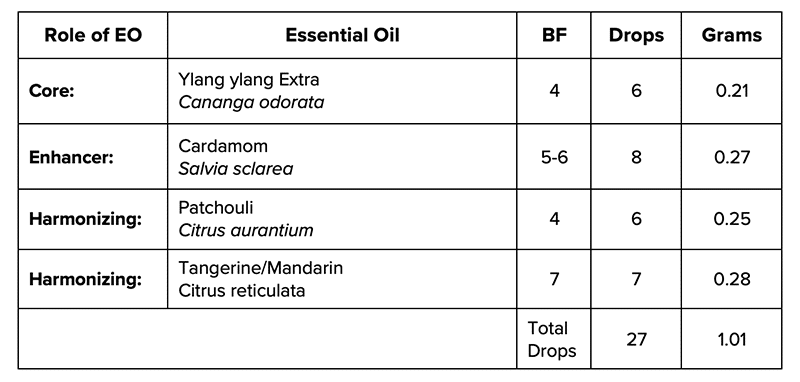
3. Using a small (10ml) glass beaker or bowl, place drops of each essential oil into beaker or bowl.
4. Measure (and weigh, if desired) 1 Tablespoon of Jojoba (approx. 12g) or other carrier oil.
5. Combine carrier oil into glass beaker/bowl with essential oils. Stir with metal or glass stirring rod until well combined.
6. Pour carrier oil + essential oil mix into salts. Stir ingredients until well combined.
7. Once combined, scoop the salts into a clean glass or PET plastic jar.
8. Label the jar with a name and list all ingredients.
9. The bathing salts are now ready for use.
How to use: Add ½ cup into the bath either just before getting into it or once in the bath.
Foot and Hand Baths
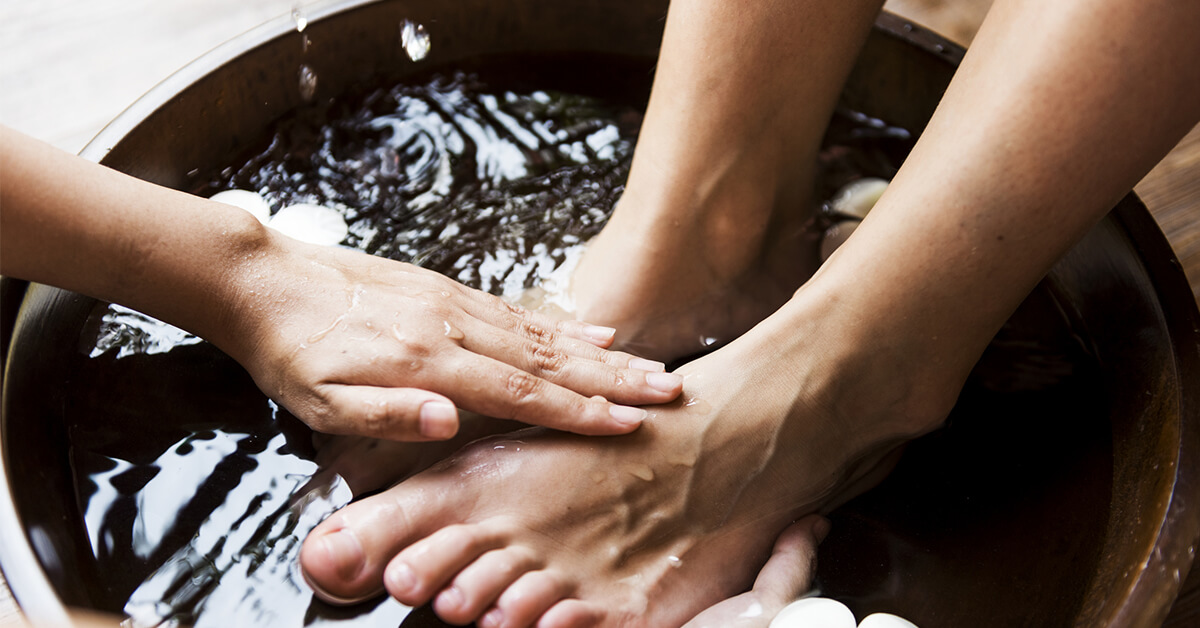
A hand or foot bath means the complete or partial immersion of only the hands or feet in the water. Green comments that “the sole of the foot is one of the most important areas in the body, having direct connection with the nerve centers that control the circulation of the pelvic and abdominal viscera.” Foot and hand baths can be used as an aspect of reflexology or bodywork treatment or simply for self-care.
In general, aromatherapy foot and hand baths are useful for:
- Stress/Anxiety
- Poor circulation
- Low energy
- Foot or hand aches and pains
- Arthritis and rheumatism (subacute phase)
- Nail and toe fungal infections
- Comfort therapy
How to make a Foot/Hand Bath:
Fill basin with water at the desired temperature and add in chosen essential oils and/or hydrosols. A dispersant such as carrier oil or liquid castile soap may be used but is not necessary in a hand or foot bath. Place feet or hands in the basin. Let feet or hands soak for 5 to 10 minutes. Add 1/2 cup of Epsom or sea salts for enhanced benefits.
Therapeutic dilution recommendation:
- 5 to 10 drops of essential oil in a basin of warm/hot water
- 1 to 3 tablespoons of chosen hydrosol
- Can use 1 Tbsp. carrier oil or unscented liquid soap