BASIC FACIAL SKINCARE PROGRAM:
Cleanse, Tone, Moisturize.
1x-2x a week exfoliate and apply the mask if needed for skin type
Cleansers
About Cleanser
Cleansers help to remove dead cells, grime, stale make-up, bacteria, and excess sebum. When excess sebum is combined with grime and dead skin cells, it blocks the pores; bacteria multiply underneath and create a spot or a full case of acne.
What’s the problem with using ordinary soap?
Ordinary soap can upset the skin’s natural acid balance and strip it of oil. Regular soap can also dehydrate the skin, meaning it takes water away, causing oil glands to overproduce in order to compensate for the loss of water and oil on the skin’s surface. This dehydration can prevent the excess oil from flowing to the skin’s surface, causing blackheads and potential pimples on oily skin.
If the skin is dry and lacking in oil, it becomes even drier with soap use because there is less oil, to begin with. This also promotes aging. Since we need some oil on the skin to lubricate and protect us from bacteria, it is wise to use a facial cleanser. According to Howard, “Anything with a high pH like soap will literally strip the barrier lipids from our skin.”
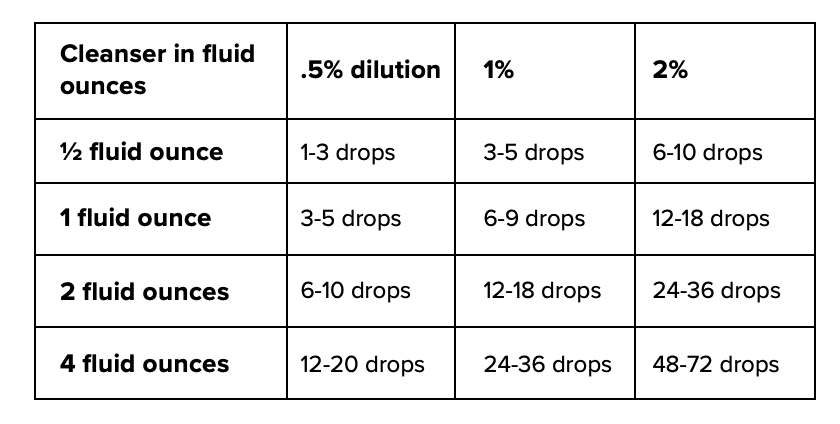
Essential Oil Dilution Rate for Cleansers
- For facial cleansers, I recommend a 0.5-1.0% dilution. For acne-prone skin, you could go up to 1.5-2%.
- Note: If using or making an oil cleanser, I tend to recommend not using essential oils as part of the formulation. Use the therapeutics of essential oils in the facial cream or facial oil.
- For body cleansers, I recommend a 1.0-2.0% dilution.
Facial Cleansers
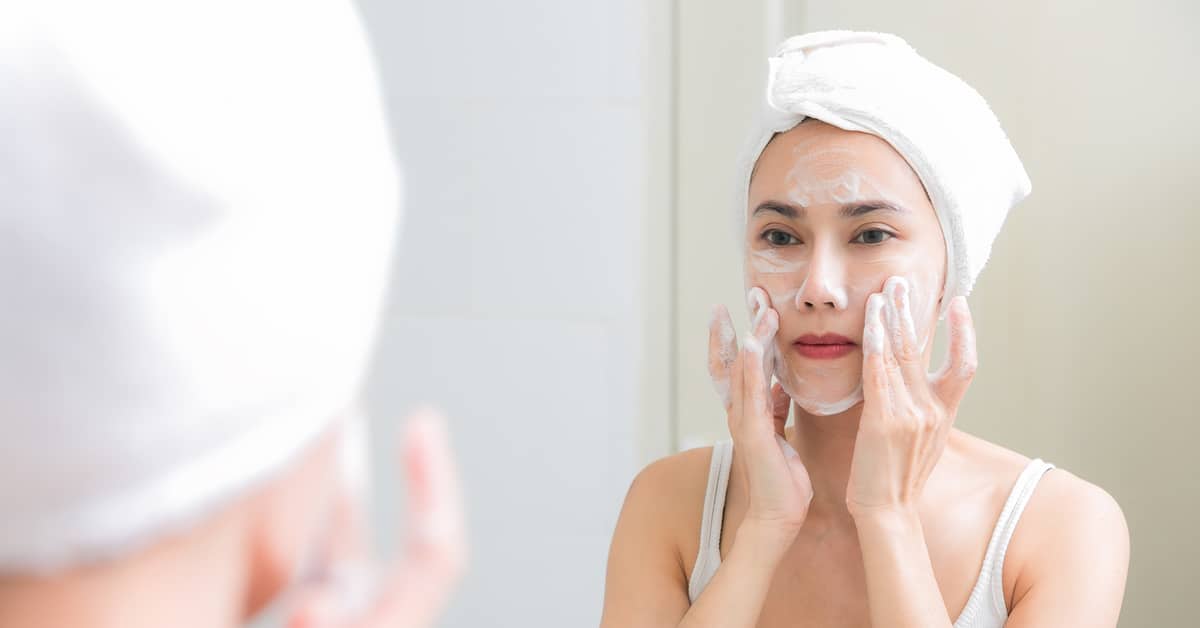
There is a wide range of facial cleansers available on the market, each catering to different skin types and preferences. These include simple natural liquid soaps, cream cleansers, cleansing milk, and cleansing grains.
The most effective cleansers are lipid-based, emollient, and able to cleanse the skin while minimizing barrier disruption. They suggest using lotions, gels, and creams that contain essential oils. Other natural ingredients to consider are plain live yogurt, olive oil, jojoba oil, finely ground oatmeal, or avocado oil.
Another gentle method of cleansing the face is to use mild exfoliants like oats and ground herbs such as lavender. Rosemary Gladstar’s famous Miracle Grain Cleansing recipe, provided below, is a fantastic option that gently exfoliates while cleansing the skin.
Lastly, liquid castile soap is a simple ingredient that can be used to create a facial cleanser, particularly for acne-prone skin. When formulating with liquid castile soap, it is highly recommended to add a carrier oil or a humectant like honey to support the skin’s health and maintain its moisture balance.
How often should you cleanse the face?
It is recommended to cleanse the face at least twice a day, in the morning and evening.
How to cleanse the face
Apply cleanser to face, gently massage onto the skin, then remove with warm water. You can use a moist hand towel to remove the cleaner, especially heavy cleansers. Once the cleanser has been removed, gently splash the skin with warm water and then a quick splash of cool water. Follow with toner, then facial oil or cream.
Cleansing Miracle Grains Recipe for Facial Cleansing
This is Rosemary Gladstar’s Famous Cleansing Grain recipe! It can be used instead of soap for the face.
Ingredients:
- 1/2 cup oats, finely ground
- 1 cup white clay
- 1/8 cup almonds, finely ground (can replace with other gentle exfoliants)
- 1/8 cup lavender flowers and rose petals, finely ground
To make:
- Combine all the ingredients in a bowl and mix well.
- Store the cleansing grains in a glass or PET container. Be sure to label jar with ingredients.
To use: Combine 1–2 teaspoons of the cleansing grains with enough water to make a paste. Gently massage onto your face. Rinse off with warm water. Follow with a facial toner and face cream or oil.
Oil Facial Cleanser
The popularity of oil cleansing is on the rise! Oil cleansing of the face protects the lipid matrix while effectively cleansing the skin. It’s also super easy and effective!
To make an oil cleanser, fill a 2-ounce bottle with a flip top or dropper lid with:
- 2 fluid ounces of Olive oil or Calendula infused Olive Oil or even Jojoba oil
- OR other similar carrier oils (e.g., sweet almond, apricot kernel, etc.)
How to use an oil facial cleanser:
- Begin with the skin when it is dry (no water on the skin).
- Apply a palmful of carrier oil to the face and gently massage the skin for a few seconds or more as needed. If the skin has make-up, it may take a minute for the oil to do its thing.
- Gently remove with a warm, damp cloth. Gently wipe the oil off the skin.
- Rinse the face with warm water, pat dry with a cloth, and then apply moisturizer or facial oil.
Acne-prone Facial Cleanser
Ingredients for Acne-prone Facial Cleanser
4 oz (120ml) bottle with flip top
- 60ml Liquid castile soap (60g)
- 2 Tablespoons Witch hazel hydrosol (33g)
- 1 Tablespoon Neroli or German chamomile hydrosol (14.4g)
- 1 Tablespoon Honey (24.75g)
Essential Oil Synergy
- 20 drops (0.46g) Cypress (Cupressus sempervirens)
- 12 drops (0.32g) Roman chamomile (Chamaemelum nobile)
- 14 drops (0.69g) Tea Tree (Melaleuca alternifolia)
To make:
- Measure (and weigh, if desired) all ingredients (except essential oils).
- Combine liquid ingredients into a glass measuring cup or bowl.
- Using a whisk or fork, gently stir until all ingredients are well combined.
- Measure (and weigh, if desired) each essential oil into the same glass beaker. If weighing, be sure to tare between each essential oil. Gently swivel the beaker to combine essential oils.
- Add essential oil synergy into the cleanser. Stir with a whisk or fork until well combined.
- Using a funnel, pour cleanser into the bottle. Label with ingredients.
- The facial cleanser is now ready for use!
Body Cleansers
Unscented liquid soap with essential oils added can be an ideal body cleanser for most people. A salt or sugar scrub is another form of cleansing the skin.
Energizing Body Cleanser
This is for an 8 oz PET bottle with a flip top.
Recipe:
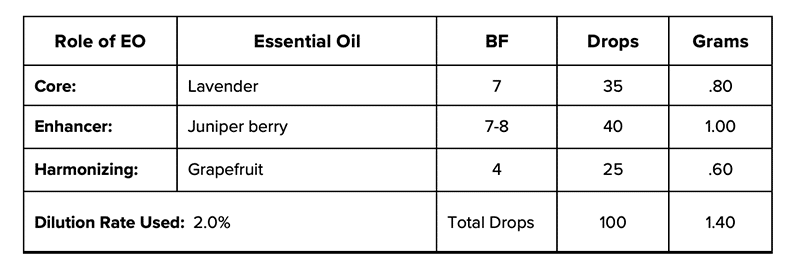
My intention/goal: To create a relaxing yet energizing body cleanser
My focus: Relaxing yet Energizing
My approach: Aromatic Palette
Formulate the cleanser base: 240ml
- 120ml Liquid Castille Soap
- 90ml Lavender hydrosol
- 30ml Honey or Rose Glycerite (or simply glycerin)
Essential Oil Synergy
2.0% dilution of Essential Oils (96 – 144 drops)
To make:
- Measure (and weigh, if desired) all ingredients (except essential oils).
- Combine liquid ingredients into a glass measuring cup or bowl.
- Using a whisk or fork, gently stir until all ingredients are well combined.
- Measure (and weigh, if desired) each essential oil into the same glass beaker. Gently swivel the beaker to combine essential oils.
- Add essential oil synergy into the cleanser. Stir with a whisk or fork until well combined.
- Using a funnel, pour cleanser into the bottle. Label with ingredients.
- The body cleanser is now ready for use!
Shelf life:
A cleanser will be good for approximately 12 months. I recommend trying to use it within 6 months to receive its vitality.
Foaming hand soap with honey recipe
You’ll need a foamer bottle.
To make honey-foaming hand cleanser
- 2 tablespoons Castile soap
- 1 tablespoon local honey
- 2 tablespoons hydrosol of your choice or add distilled water
- 12-14 drops Fragonia essential oil (can replace with Laurel, lemon, lavender, tea tree, etc.
Combine all ingredients in a glass measuring cup and gently stir until well combined. Pour in the bottle, place the foamer cap on, and it’s ready for use.
See Reel on Instagram to see how I made this foaming hand cleanser!
https://www.instagram.com/reel/ClTaGX5olef/
About Toners
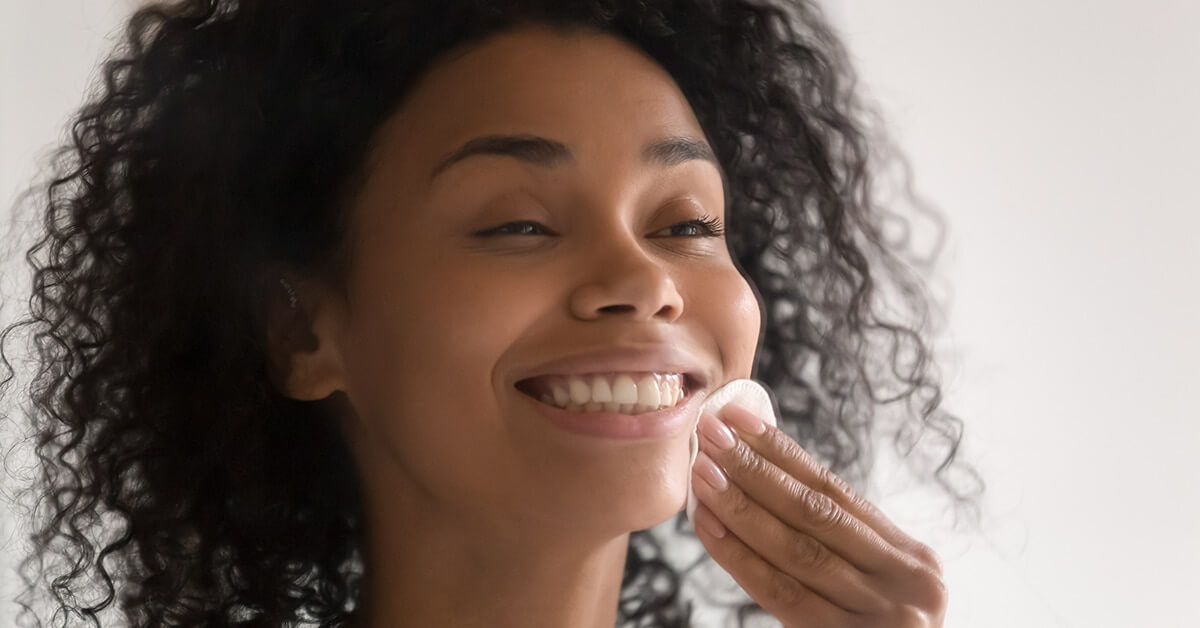
A toner helps to remove any soapy film or traces of cleanser, makeup, or dirt. Toners can also gently stimulate surface circulation and help restore the skin’s acid balance (healthy skin should be slightly acidic to protect from bacteria). The primary purpose of toning is to gently prepare the skin to accept nourishing, moisturizing, regenerating, activating, or boosting skin products. A toner can be used first thing in the morning and the evening after cleansing. Toners are followed by the application of a skin moisturizing cream.
The general formula for toners is:
- Hydrosols (94-100%)
- Glycerites, Glycerin, Honey (0-5%)
- Preservative (1%), if using
NOTE: I don’t personally recommend using essential oils in toners. Their therapeutic benefits are best in other types of products, such as facial oils or creams.
Hydrosols as Toners
Hydrosols are a fantastic choice for toners, as they can be used individually or combined to create custom blends tailored to specific skin types. For instance, a mixture of Roman chamomile, Lavender, and Witch hazel works wonders for oily skin, helping to balance sebum production and minimize the appearance of pores. Alternatively, a combination of Rose, Orange flower, and Lavender hydrosols is perfect for mature skin, as it helps to nourish and hydrate the skin. The versatility of hydrosols makes them an essential part of any skincare routine, allowing you to create personalized toners that cater to your unique skin concerns.
Other ingredients for toners include: Aloe vera gel, apple cider vinegar (balances pH)
Toner for Acne-prone skin
This is for a 4 fl. oz. toner.
My intention/goal: To create an astringent facial toner for acne-prone skin
My focus: The Skin
My approach: Therapeutics
Product size: 4 fl. oz.
1. Select 1 – 3 hydrosols based on the goals of the toner.
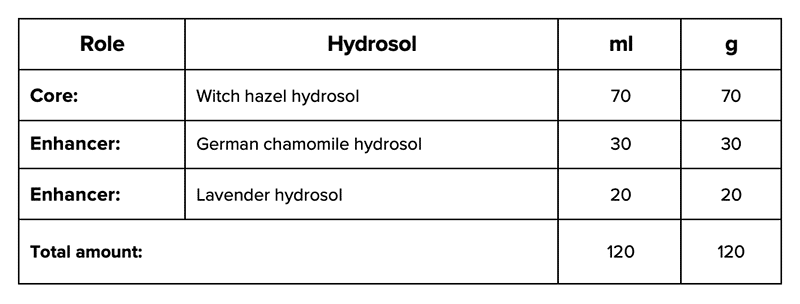
NOTE: With hydrosols as toners, it is fine not to weigh ingredients. You can measure ingredients using millimeters or fluid ounces.
2. Measure (and weigh, if desired) each hydrosol.
3. Combine hydrosols in a measuring cup. Stir to combine hydrosols.
4. Using a funnel, pour the toner into the final bottle.
5. Label the bottle with the name and list all ingredients.
6. The toner is now ready for use.
How to use
Toners can be applied by using a cotton ball and gently wiping the face.
Do I need to use a preservative?
When incorporating nutrient-rich additives and humectants like honey, aloe vera gel, or glycerin into your formulation, it becomes important to consider the inclusion of a preservative system. These ingredients, while beneficial, can inadvertently support the growth of microorganisms, potentially compromising the stability and safety of your product.
To mitigate this risk, you may want to explore the use of natural preservatives, such as those containing potassium sorbate or sorbic acid. These compounds have been shown to effectively inhibit microbial growth, ensuring that your formulation remains safe and stable throughout its intended shelf life.
Hydrating Spritzers
Hydrosols can also be used as hydrating spritzers prior to applying a cream or facial oil. To make a hydrating spritzer, you can use either a single hydrosol or a combination of hydrosols. You can also add other ingredients, such as aloe vera gel, apple cider vinegar (which balances pH), glycerin and herbal glycerites.
How to formulate a hydrating spritzer
This is for a 4 fl. oz. spray bottle
My intention/goal: To create a beautiful hydrating spritzer
My focus: The Skin
My approach: Therapeutics
1. Select ingredients to use in hydrating spritzer
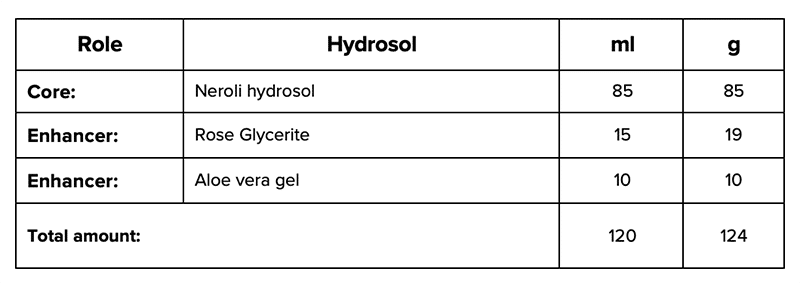
2. Measure (and weigh) each ingredient in sterilized glass beakers.
3. Combine ingredients in a measuring cup. Stir with a whisk until well combined.
4. Using a sterilized funnel, pour the formulation into the final bottle and place the spritzer cap on.
5. Label the bottle with the name and list all ingredients.
6. The spritzer is now ready for use.
How to use
After cleansing the skin, spray facial skin with the hydrating spritzer, then immediately apply cream or facial oil.

 Aromatherapist as Teacher

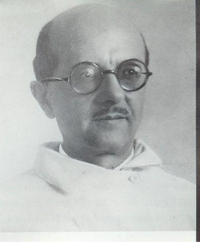 This history has been compiled from the work of Marcel Gattefosse (1992) on writing about his father in the International Journal of Aromatherapy. Rene-Maurice Gattefosse was born in the French region of Lyon in 1881. Gattefosse grew up around plants and aromas. His father, Louis Gattefosse, owned and operated the Gattefosse perfume business, which remains in business today. During Rene’s youth, perfumes were still created from a mixture of natural essential oils, alcohol extracts, flower pomades, and some synthetic products. Louis and his two sons, Abel and Rene-Maurice, worked closely together to define the conditions under which perfume compositions were prepared so as to achieve constant levels of strength and odor. In 1906, they published a book entitled “Formulaires de Parfumerie de Gattefosse.”
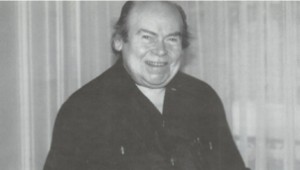 Dr. Jean Valnet was trained as a traditional medical doctor at the University of Lyon in 1945. Valnet began his research into essential oils in 1953, and his focus was mainly on the best methods of application as well as dosage levels needed to attain maximum benefit without risk of side effects.
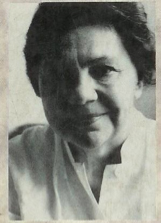 Marguerite Maury deserves special attention as her work with essential oils led to the creation of holistic aromatherapy practice as we know it today. Born in Austria in 1895, Maury led an interesting and passionate life. She was trained as a Nurse and surgical assistant in Vienna and then moved to France, where she was given a book entitled “Les Grandes Possibilites par les Matieres Odoriferantes”. (Ryman, D., 1989) This book was to provide Maury with a lifelong passion for researching and educating others on the applications of aromatherapy. Together with her husband, Dr. Maury, they explored numerous healing therapies, including homeopathy, naturopathy, acupuncture, yoga, meditation, and others.