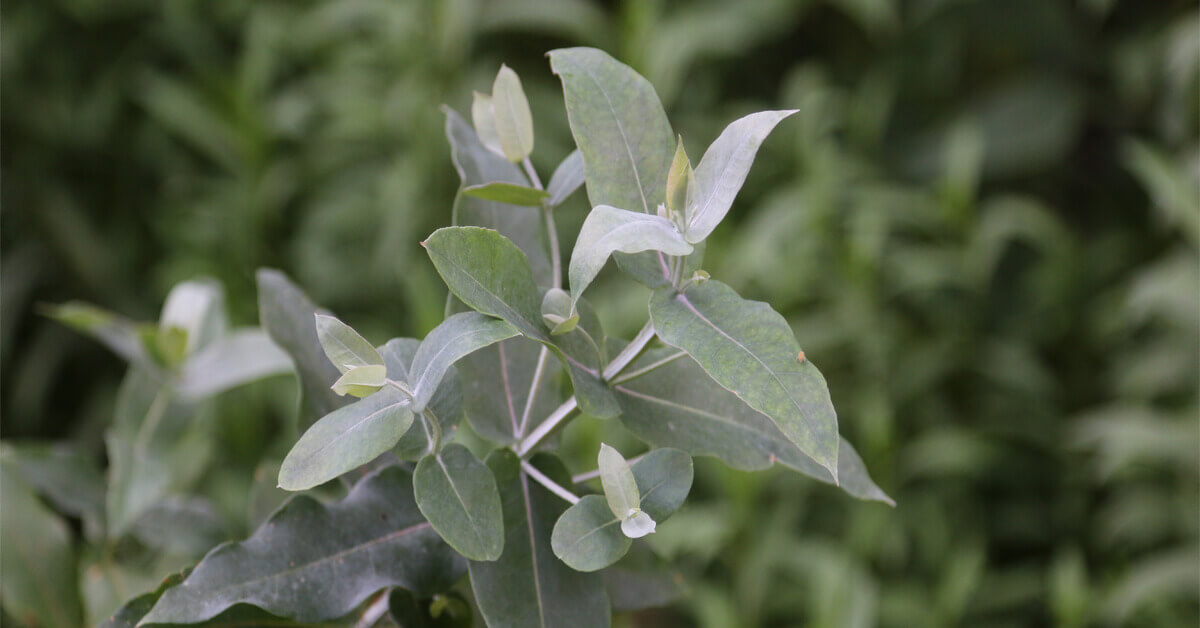
Eucalyptus, Narrow leafed peppermint
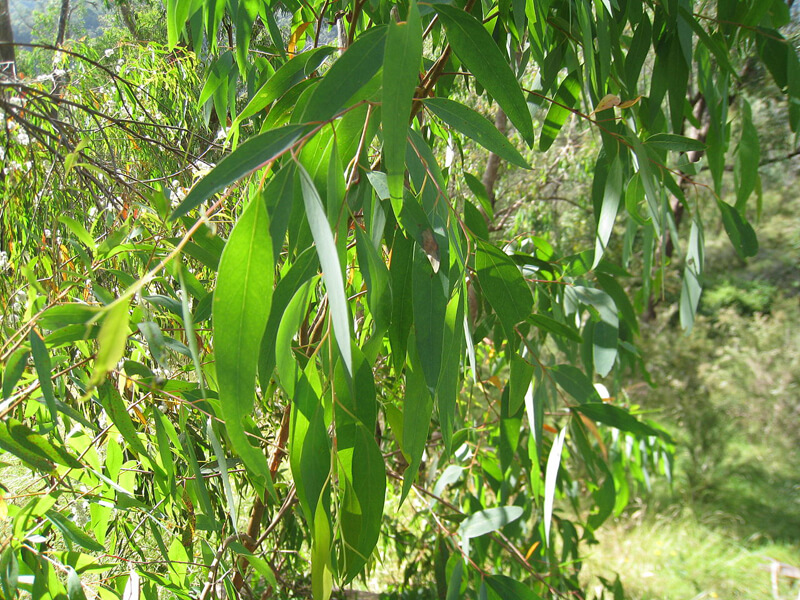
Eucalyptus radiata
BOTANICAL INFORMATION
Common name: Narrow-leaf peppermint gum
Scientific name: Eucalyptus radiata Sieber ex DC
Botanical family: Myrtaceae
Conservation status: Not defined
EXTRACTION INFORMATION
Country of Origin: Australia, Spain
Part of Plant Used: Leaves and mature branches
Extraction Method: Distillation
Oil Content: 3.5-6% from fresh foliage and twigs
<1.5% from dry material
Color of Oil: Clear to pale yellow
AROMATIC CHEMISTRY
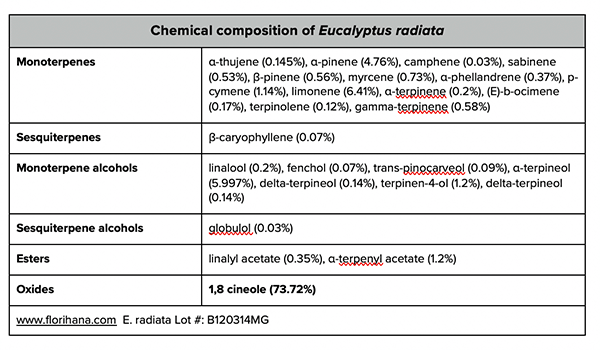
Chemical Feature: Rich in oxides (up to 74% 1,8 cineole), supported by monoterpenes and monoterpene alcohols.
SAFETY INFORMATION
- Caution for children: Avoid application of 1,8 cineole-rich essential oils to the face or near the nose of infants and children under age of 5. Do not instill 1,8 cineole-rich essential oils into the nose of infants or children. Use low dilutions (less then 1%).
- Internal contraindication: Essential oils rich in 1,8 cineole should not be used with infants or young children via the internal route (oral, rectal suppositories, etc.)
THERAPEUTIC ACTIONS
Analgesic, antibacterial , anticatarrhal, antifungal, anti-inflammatory, anti-infective, antirheumatic, antimicrobial, antiparasitic, respiratory antiseptic, antispasmodic, antitussive, antiviral, decongestant, expectorant, febrifuge, insecticide, mucolytic, rubefacient, stimulant
SYSTEM AFFINITIES
Respiratory
BLENDING INFORMATION
Aroma description: Fresh, peppery-camphoraceous
Blending factor: 4
Notes: Top
Blends well with: Peppermint, rosemary chemotypes, Spanish sage, Lavandula latifolia, grapefruit, lemon, Pinus spp., juniper, lemongrass, niaouli
CORE INDICATIONS
- Circulatory system: stimulating
- Immune System: Lowered immunity, loss of energy, asthenia (physical or emotional), immune deficiency, chronic fatigue
- Musculoskeletal system: muscular aches and pains, arthritis, rheumatism, plantar fasciitis, sprains, neuralgia
- Respiratory system: chronic bronchitis, acute bronchitis, sinusitis, asthma, antiseptic qualities good for sore throat and infections, upper respiratory tract infection, ear infections, mucus cough, laryngitis, clears the head especially when used with rosemary and peppermint, nasal congestion, coughs, cold, flu, pertussis, thins bronchial sputum. Eucalyptus radiata is very much used with children here in France, it is referred to as the Eucalyptus for sensitive people, the elderly, and asthmatics. I have seen it on many occasions put an end to the beginning of a cold, tonsillitis, or flu if the person is treated at the very first signs of illness.
- Skin: herpes simplex3, shingles, chickenpox, measles, acne, ulcers, wounds, boils, oily skin
- Psyche and Emotion: energizing, awakening, uplifting, refreshing, can have a “cooling” emotional effect, clears and stimulates the mind, aids concentration, good for exhaustion, balancing when there is an energy imbalance, purifying and cleansing to negative energies, especially after an argument
According to Schnaubelt (2011), Eucalyptus radiata reflects the whole organism and is dramatically different from E. globulus (which is typically rectified) and more complex. E. radiata has strong antiviral activity.4
- Energetics: Energizing without being overly stimulating, helps one think clearly and get on with projects. It has a protective aspect and is sometimes used to clear people and spaces of negativity.
Sample Aromatic Treatment for Herpes Simplex
by Ron Guba (2009)
- Eucalyptus radiata 2ml
- Melaleuca alternifolia 2ml
- Mentha x piperita 0.5ml
- Cymbopogon flexuosus 0.5ml
Mix into 5ml of Calophyllum vegetable oil. This is an aromatic vegetable oil noted for its antiviral properties. This blend is a 50% concentration of essential oils. Should there be any skin irritation, add another 5 to 10mls of Calophyllum oil.
Apply a small amount to the affected area, at least three times per day, up to every two hours. Continue application until the herpes sore has resolved.
Research note: Both tea tree and eucalyptus have been found to exhibit antiviral activity against the Herpes Simplex virus.5
Experiential Exercise
As you learn about each essential oil, take your time to complete the essential-oil-exercise. Create a notebook to keep you essential oil data sheets in along with your own form. Experiment combining the essential oils with some of the others in the course. This is a great experiential exercise to reinforce your learning of each individual essential oil.